Broken on Purpose: How Glitch Culture Became the New Flex in Underground Design
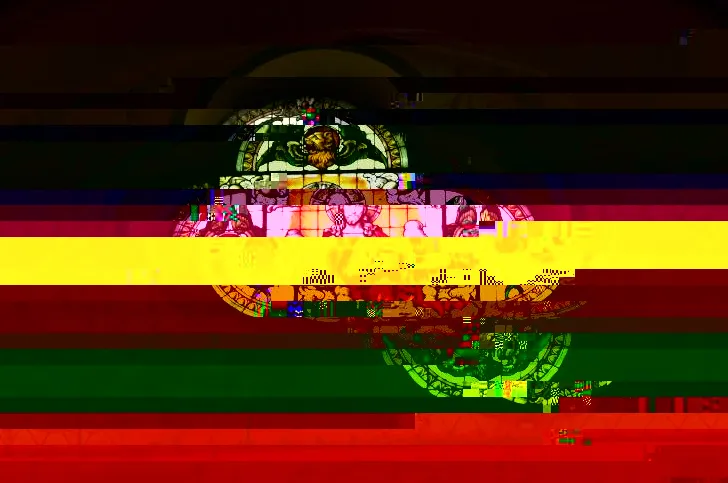
Photo: Lucas Rafael Tenllado Gil, CC BY-SA 4.0, via Wikimedia Commons
There's a poster making the rounds in certain corners of the internet — a concert flyer where the text looks like it melted, the colors bleed into each other like a VHS tape left in a hot car, and the whole thing seems like it survived a hard drive crash. It did not survive a hard drive crash. Someone spent three hours making it look exactly like that.
Welcome to glitch aesthetics, the design philosophy that says perfection is overrated, polish is performative, and the most honest thing a visual artist can do right now is let the machine look like it's screaming.
From Accident to Intention
The glitch as an art form has roots that go back further than most people realize. Nam June Paik was manipulating video signals in the 1960s. Early net artists in the '90s were deliberately exploiting browser bugs. But what's happening now feels different — more urgent, more widespread, and way more commercially interesting.
For a new generation of designers, the glitch isn't a mistake to apologize for. It's a credential. It signals that you understand the underlying architecture of digital tools well enough to break them on your own terms. In a design landscape absolutely drowning in clean sans-serif fonts and soft-gradient brand identities, a corrupted texture or a datamoshed video frame hits like a bucket of cold water.
"There's this assumption that good design means invisible design," says one Brooklyn-based visual artist who works primarily in corrupted imagery and pixel-sorted photography. "But invisible to who? Clean and minimal is its own ideology. Glitch just makes that visible."
The Gen Z Rejection of the Polished Feed
It's impossible to talk about this movement without talking about the cultural context that produced it. Gen Z grew up watching influencer culture turn authenticity into a brand strategy — raw and unfiltered became just another aesthetic, carefully curated to look uncurated. The result was a kind of aesthetic fatigue, a generation deeply suspicious of anything that looks too intentional, too smooth, too optimized.
Glitch offers a way out of that loop. Not because it's actually random — it rarely is — but because it carries the visual grammar of things going wrong, of systems failing, of content that wasn't supposed to look like this. It's anti-aspirational in a way that resonates hard with young creators who've watched the aspirational internet curdle into something exhausting.
You see this everywhere once you start looking. In the cover art of underground rap projects out of Atlanta and Chicago. In the visual identities of small experimental theaters in cities like Portland and Philadelphia. In indie game aesthetics that deliberately evoke corrupted cartridges and dead pixels. In zine layouts that look like they were run through a fax machine five times on purpose.
The Game Dev Connection
Independent game developers have been some of the most interesting practitioners of intentional glitch aesthetics. Games like Doki Doki Literature Club, Undertale, and a wave of smaller itch.io projects have used visual and audio corruption as genuine narrative tools — moments where the game appears to break become moments where the story breaks through.
This isn't just clever tricks. It's a fundamental rethinking of what digital imperfection communicates. When a game's UI starts glitching, players feel something shift. The fourth wall doesn't just crack — it dissolves. The aesthetic does emotional work that clean, polished graphics simply can't.
Indie devs working in this space talk about the glitch as a form of honesty about the medium itself. Games are code. Code fails. Showing that failure — or simulating it — is a way of acknowledging what the thing actually is, rather than hiding it behind the illusion of seamlessness.
Status Through Scarcity of Smoothness
Here's the paradox that makes glitch aesthetics genuinely fascinating as a cultural phenomenon: in a world where professional-grade design tools are more accessible than ever, imperfection has become harder to pull off convincingly.
Anyone can generate a clean logo with AI tools in thirty seconds. Anyone can produce a competent, well-kerned poster with Canva. The floor has risen dramatically. Which means the ceiling has shifted too — and right now, the ceiling is occupied by people who know how to make things look authentically wrong.
There's real skill involved. Effective glitch design requires understanding color theory, composition, and typography well enough to violate those rules in ways that feel intentional rather than incompetent. The difference between a glitch aesthetic that works and one that just looks like a design student forgot to proofread is enormous, and experienced eyes can spot it immediately.
This is what makes it a status symbol in underground creative communities. It's not about having the most expensive tools or the most polished output. It's about demonstrating a kind of fluency — the ability to control the chaos, to direct the failure, to make the broken thing say exactly what you want it to say.
What Comes Next
The inevitable question with any underground aesthetic is: what happens when it goes mainstream? Glitch elements have already started appearing in major brand campaigns, music video treatments from major labels, and fashion editorial photography. The co-option machine is running.
But practitioners in the underground don't seem particularly worried. The whole point of glitch aesthetics is that it's difficult to fake at scale. Corporate design teams can borrow the visual vocabulary, but they tend to produce something that looks like glitch rather than something that is glitch — sanitized corruption, safe chaos, imperfection with all the edges filed off.
The real thing continues to evolve faster than the imitations can follow. And for the designers, artists, and developers who've built their practice around the broken and the beautiful, that gap is exactly where they want to live.
Broken on purpose. Perfect by design. The two things, it turns out, aren't opposites at all.