Saving the Slop: How Gen Z Became the Unlikely Librarians of Forgotten Internet History
There's a 22-year-old in Portland who has spent the last three years downloading every deleted Vine she can track down. Not the famous ones — not the "road work ahead" guy or the kid who drops his pizza. The ones with like forty-seven views. The ones where someone's mom accidentally hit record during a backyard barbecue and posted it thinking it was a photo. The ones that weren't supposed to matter.
She calls her project a "grief archive." The internet calls it a hobby. Manefon calls it one of the most interesting art movements happening right now that nobody's talking about.
The Feed Has No Memory (And That's the Problem)
Here's the uncomfortable truth about digital culture in 2024: almost none of it is built to last. TikTok deletes accounts. Tumblr purges content. Twitter — sorry, X — has become a graveyard of broken links and deactivated profiles. Even Google quietly sunsets products that millions of people used to organize their lives around. The platforms we've handed our creative output to are, at their core, businesses with no particular obligation to preserve anything.
For older generations, that might feel abstract. But for people who grew up entirely online, who had their first creative breakthroughs on platforms that no longer exist in recognizable form, the stakes feel intensely personal. The internet ate their childhood and didn't even save the receipts.
Enter the accidental archivists — a loosely connected community of young creators, coders, and obsessives who've decided that if the platforms won't save this stuff, they will.
What Counts as Worth Saving
Here's where things get genuinely interesting. Traditional archivism has always been about preserving the important stuff — letters from presidents, first editions, master recordings. What these digital archivists are doing is almost the opposite. They're deliberately targeting the ephemeral, the embarrassing, the algorithmically irrelevant.
We're talking about:
- Abandoned Tumblr aesthetics from 2012-2014, entire blogs built around soft grunge or pastel goth that got deactivated when their creators aged out or moved on
- Deleted TikToks that were taken down for vague community guidelines violations, or just because the creator got embarrassed
- Niche meme formats that had a two-week lifespan on a specific subreddit before the algorithm stopped surfacing them
- Early YouTube comment sections on videos that have since been privated, capturing a kind of unfiltered cultural conversation that simply doesn't exist anymore
- Flash game screenshots and walkthroughs for games that can no longer run on modern browsers
One archivist who goes by the handle @rottenwebring on Tumblr described her collection to us as "a museum of things that didn't make the cut." Her personal archive contains over 40,000 screenshots organized by year, platform, and what she calls "emotional texture." She has a folder literally labeled "things that made someone cry in 2016."
Digital Decay as an Art Form
What separates this from simple hoarding — and it's a fair distinction to make — is the intentionality behind how these archives are curated and shared. Many of these archivists aren't just saving files on a hard drive. They're building public-facing projects, zines, gallery installations, and interactive websites that frame digital decay as something worth contemplating.
A collective in Chicago recently held a gallery show called Cache & Release that projected recovered deleted content onto gallery walls alongside handwritten curatorial notes explaining the context of each piece. One wall was dedicated entirely to error messages — 404 pages, broken image placeholders, the spinning wheel of death — framed as portraits of digital loss.
The reception was, by all accounts, packed. Mostly people under thirty, many of whom spent the evening saying things like "oh my god, I remember when this existed" to strangers.
That emotional hit — the specific nostalgia of remembering something you didn't know you'd forgotten — is exactly what these archivists are chasing.
Against Algorithmic Amnesia
There's a political dimension to this movement that's worth naming directly. A lot of these young archivists are explicitly framing their work as resistance to what some are calling "algorithmic amnesia" — the way that platform-driven content cycles condition us to forget things almost immediately after we've consumed them.
When a piece of content goes viral, it exists in collective consciousness for maybe a week. Then the algorithm surfaces something new and the old thing evaporates. Platforms benefit from this cycle — more content, more engagement, more ad revenue. But the cultural byproduct is a kind of enforced forgetting, a present-tense internet that has no real relationship to its own history.
For marginalized communities especially, this erasure has real consequences. LGBTQ+ creators have watched their content get quietly suppressed or removed. Black creators have seen their trends stripped of attribution before they even finish trending. Indigenous artists have had culturally significant work flagged and deleted. The archive isn't just nostalgia — it's evidence.
"The algorithm decides what's worth remembering," one archivist told us. "We're deciding that the algorithm is wrong."
The Tools of the Trade
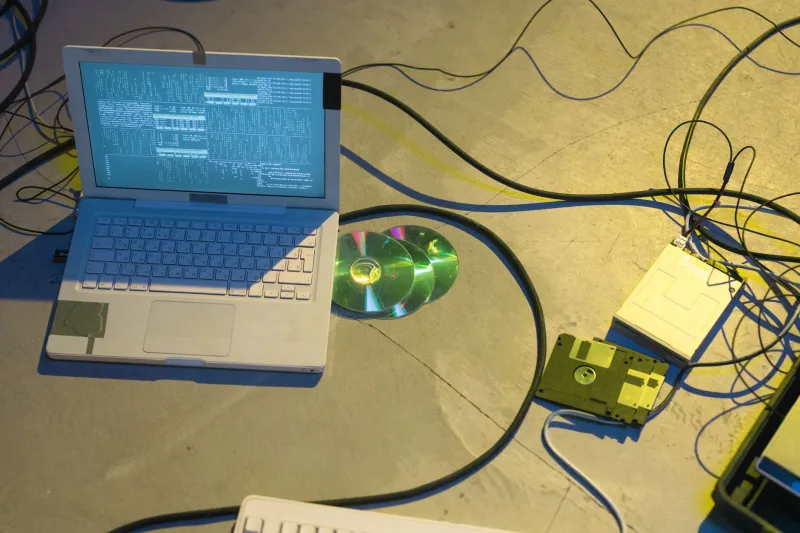
So how does this actually work, practically speaking? The toolbox is a mix of technical solutions and pure stubbornness. Browser extensions like DownThemAll or Video DownloadHelper handle the easy stuff. The Wayback Machine at archive.org is a constant reference point. More dedicated archivists run their own local servers, use command-line tools to scrape content before it disappears, and maintain encrypted backups across multiple drives.
Some have built bots that automatically monitor accounts known for posting ephemeral content — artists who frequently delete, creators mid-controversy — and capture screenshots in real time. It's a gray area legally, and most archivists acknowledge that. The ethics of saving someone's deleted post without their permission are genuinely complicated, and the community has ongoing, sometimes heated debates about consent, ownership, and when preservation becomes voyeurism.
Those conversations, honestly, are part of what makes this movement interesting. It's not a passive hobby. It's a practice with stakes.
What Gets Lost When We Stop Caring
There's a version of this story that ends with a tidy conclusion about how every generation finds a way to preserve culture, and this is just the digital version of collecting vinyl or saving newspaper clippings. And sure, there's truth in that.
But the scale and speed of digital loss is genuinely without historical precedent. We are producing more creative output than any civilization in human history, and we are losing more of it, faster, than any civilization in human history. The platforms we've entrusted with that output have shown, repeatedly, that they will delete it when it becomes inconvenient or unprofitable.
The archivists aren't just nostalgic. They're paying attention to something the rest of us are too distracted to notice: that the internet has a memory problem, and nobody in charge seems particularly bothered by it.
Somewhere in Portland, a young woman is downloading her forty-eighth forgotten Vine. It has thirty-three views. Someone's kid is laughing at something off-camera. Nobody famous is in it. It will never trend.
She's saving it anyway.