Dead Tech, Living Culture: The Young Collectors Turning Obsolete Gadgets Into Personal Shrines
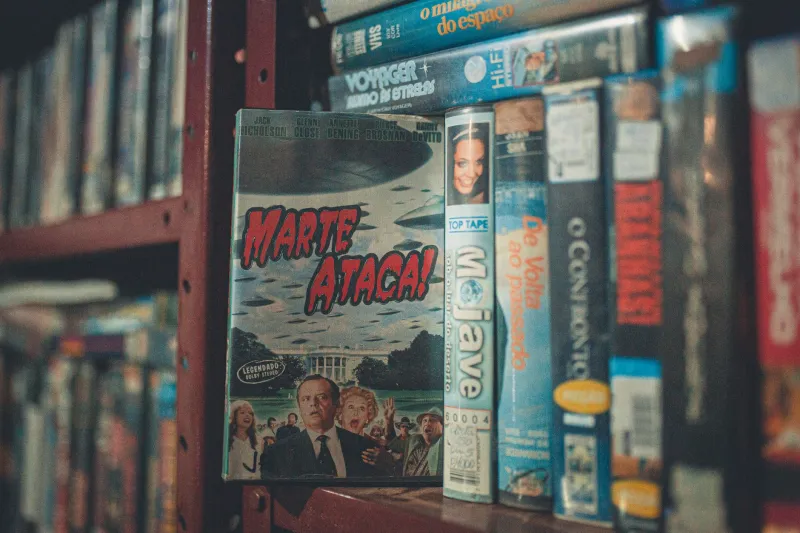
Somewhere in a third-floor apartment in Portland, a 26-year-old graphic designer named Reyes has devoted an entire wall to VHS tapes she's never actually watched. They're arranged by color — not genre, not year, not alphabetically — because she says the aesthetic logic feels more honest than anything a streaming algorithm has ever offered her. Next to the tapes sits a Sony Mavica digital camera from 1998 that saves photos to floppy disks, a Game Boy Color with a cracked hinge, and a Nokia 3310 still capable of a full week of battery life.
Reyes isn't a hoarder. She's a curator.
And she's far from alone.
The Museum in Your Living Room
Across the United States, a quiet but unmistakable movement is taking shape inside bedrooms, studio apartments, and shared houses. Young people — primarily millennials in their late twenties and thirties, and Gen Zers who grew up entirely inside the smartphone era — are deliberately collecting obsolete technology. Not to flip it on eBay. Not out of pure sentimentality. But as a conscious, almost philosophical act of refusal.
Call it the analog revolt. Call it dead media preservation. Call it whatever you want — the people doing it call it home.
The objects themselves vary wildly. VHS camcorders. MiniDisc players. Polaroid cameras and their harder-to-find competitors. Dot matrix printers. Overhead projectors. Pagers. CRT televisions that weigh more than a golden retriever. Each of these things was declared obsolete by the market, discarded by the mainstream, and then quietly rescued by people who saw something the industry didn't: that "outdated" is not the same as "worthless."
Against the Infinite Scroll
To understand why this is happening now, you have to understand what these collectors are reacting against.
We live inside a digital environment that is relentless by design. Algorithms are engineered to hold your attention indefinitely. Content is produced at a volume no human could ever fully consume. Platforms update their interfaces without warning, erasing muscle memory overnight. Cloud services shut down and take years of personal data with them. The digital world, for all its convenience, is profoundly unstable — and increasingly, people are noticing.
Dead media doesn't behave that way. A VHS tape does exactly what it did in 1987. A cassette walkman doesn't push notifications. A film camera can't be remotely updated to lock you out of your own photos. There's a reliability to obsolete technology that feels almost radical in 2024, a stubbornness that users find genuinely comforting.
"My Minolta film camera doesn't know what I want," says Dani, a 23-year-old in Chicago who shoots exclusively on expired 35mm film she finds at thrift stores. "It doesn't learn my habits. It doesn't try to serve me an ad. It just takes the picture I point it at. That's it. That's the whole relationship."
That simplicity isn't a limitation to Dani. It's the entire point.
Creative Resistance Through Imperfection
There's also something happening creatively inside these collections that goes beyond protest. Dead media has a texture that modern technology has largely engineered away. VHS footage bleeds and blooms at the edges. Film grain is unpredictable. Early digital cameras produce images with a blocky, low-resolution quality that no Instagram filter can authentically replicate, no matter how many presets you stack.
For a generation of creators raised on hyper-polished content, that imperfection is genuinely exciting. It's a quality you can't fake convincingly, which makes it scarce — and scarcity, in a world of infinite content, is one of the last forms of real value.
Musicians are recording demos on four-track cassette recorders and releasing them without cleanup. Visual artists are deliberately shooting on cameras with known technical faults. Zine makers are scanning pages on machines old enough to leave roller marks across the image. The glitches aren't being corrected. They're being featured.
This is what separates the analog revolt from simple nostalgia. Nostalgia looks backward with longing. This movement looks backward with intention — mining old tools for aesthetic and conceptual possibilities that the current moment can't produce.
Community Built Around the Broken and the Beautiful
What makes this more than a personal hobby is the community infrastructure growing up around it. Dead media collectors find each other at estate sales, thrift stores, and flea markets — but increasingly, they're organizing online (with some irony) through Discord servers, subreddits, and niche Instagram accounts dedicated to specific formats.
There are communities built entirely around MiniDisc preservation. Facebook groups where members trade working VHS decks and repair tips. YouTube channels with hundreds of thousands of subscribers dedicated to restoring vintage computers and gaming hardware. In cities like Austin, Brooklyn, and Los Angeles, informal swap meets bring collectors together to trade gear, share knowledge, and occasionally just sit in a room together watching something on a functioning LaserDisc player.
The communal element matters. These aren't isolated collectors retreating from the world — they're building alternative social spaces around shared objects and shared values. The dead media collection becomes a conversation starter, a common language, a reason to gather.
"I've met some of my closest friends through this stuff," says Marcus, a 31-year-old in Atlanta who collects defunct gaming consoles and runs a small repair workshop out of his garage. "You bond over the hunt, over getting something working again. There's a real satisfaction in that. More than anything I've gotten from a streaming service."
Planned Obsolescence as Political Problem
Understanding this movement also means taking seriously its implicit critique of consumer technology culture. Planned obsolescence — the practice of designing products to become non-functional or unfashionable within a predictable timeframe — has shaped the electronics industry for decades. Devices are built to break. Software updates are engineered to slow older hardware. Repair is made intentionally difficult.
The people building personal museums of dead media are, whether they frame it this way or not, pushing back against that system. By keeping old technology functional, by learning to repair rather than replace, by valuing objects that the market has declared worthless, they're practicing a kind of material dissent.
Right to Repair advocacy — the growing legal and political movement to require manufacturers to provide repair access for their own products — shares philosophical DNA with the dead media movement. Both are fundamentally about ownership: the radical idea that if you bought something, it belongs to you, and you should be able to fix it, modify it, and use it on your own terms.
What the Algorithm Can't Archive
There's one more thing worth naming about these collections, something harder to quantify. They represent a form of memory that the digital world is genuinely bad at preserving.
Streaming platforms remove content without notice. Social media archives disappear when companies fold or change their terms. File formats become unreadable. The cloud, it turns out, is not permanent — it's just someone else's hard drive, subject to someone else's business decisions.
A VHS tape in a climate-controlled room can last decades. A working film camera from 1975 will still take pictures tomorrow. Physical media, for all its bulk and inconvenience, has a durability that digital infrastructure can't reliably match.
The young collectors building these personal museums understand something important: culture is fragile, and preservation is an act of care. They're not just saving old gadgets. They're keeping alive the textures, the accidents, and the material experiences of a recent past that the industry is actively trying to make you forget.
That's not nostalgia. That's resistance. And it fits on a shelf just fine.