Forge, Ferment, and Forget the Feed: Why Gen Z Is Mastering Medieval Crafts to Save Their Minds
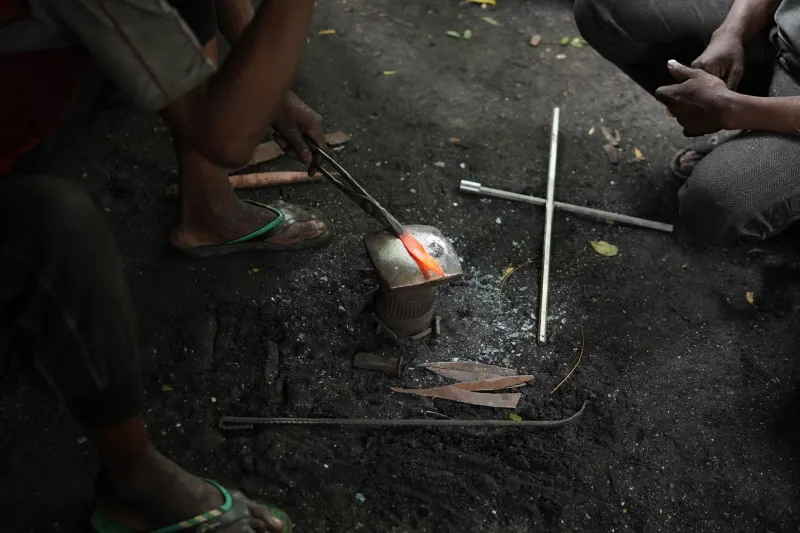
There's a forge in a converted garage in Asheville, North Carolina, where 24-year-old Dani Reyes spends her Saturday mornings hammering hot steel into hooks, hinges, and the occasional wildly impractical decorative axe. She doesn't have a TikTok account dedicated to it. She doesn't sell prints of herself doing it. She just does it — sweating through her shirt, occasionally burning her forearm, and feeling, she says, more mentally present than she has at any other point in her week.
"The first time I got a piece of metal to actually bend the way I wanted it to, I cried," she told us. "Not because it was pretty. Because it was real. It was a thing I made with my hands that didn't disappear when I closed a tab."
Dani is part of a movement that's harder to quantify than cottagecore but far more consequential. Call it radical craft. Call it analog resistance. Call it what it actually is: a generation of digitally exhausted young people going back to school on skills that civilization spent centuries perfecting and then largely abandoned.
Cottagecore vs. The Real Thing
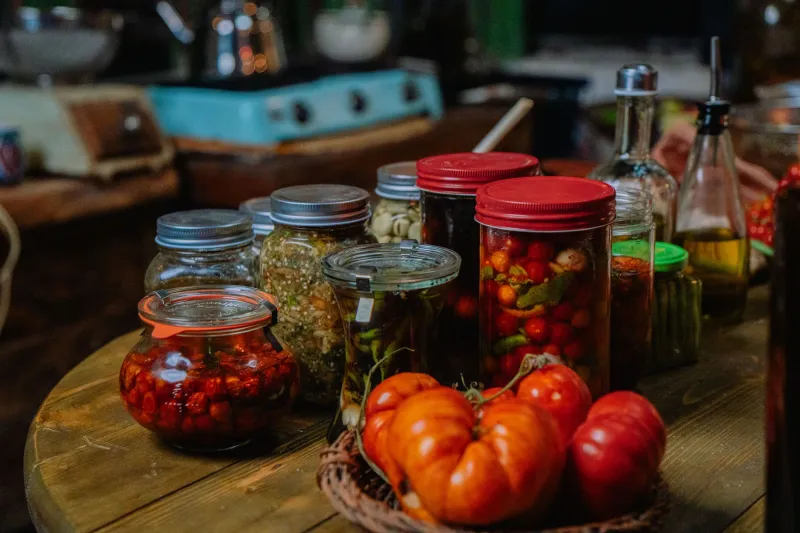
Let's get something out of the way: this is not cottagecore. Cottagecore — the soft-focus, wildflower-strewn aesthetic that peaked somewhere around 2020 — was largely about the look of rural simplicity. Linen dresses. Sourdough starter jars artfully lit by a window. Mushroom foraging as personality. Beautiful, sure. Substantive, often not.
What's happening now is different in a way that matters. The people driving this movement aren't performing craft — they're grinding through it. They're taking weekend blacksmithing intensives in rural Pennsylvania. They're driving to regional natural dye workshops to learn which local plants actually produce which colors and why the mordant chemistry matters. They're joining woodworking co-ops in cities like Portland, Detroit, and Baltimore where the vibe is less Instagram and more union hall.
Marcus Ellison, 27, runs a small woodworking space out of a shared studio in Detroit. He started learning joinery two years ago after burning out of a UX design job he describes as "making things disappear into other things that also disappear." He now teaches beginner hand-tool classes twice a week and has a three-month waitlist.
"People show up not knowing how to hold a chisel and they leave three hours later having made a small box that will outlast their phone by about 40 years," he said. "That hits different when you've spent your whole career making things that exist for 18 months before a software update kills them."
The 'Useless Knowledge' Paradox
Here's the irony that keeps coming up in conversations with people deep in this world: the skills they're learning are widely considered economically useless, and that's precisely why they're valuable right now.
In an era when AI is methodically working its way through every knowledge-based profession — writing, coding, design, analysis — there's something almost defiant about mastering a skill that requires a body. You cannot prompt your way into knowing how hot steel needs to be before it's workable. You cannot generate your way into understanding how weld seams behave under stress. The knowledge lives in your hands, your nose, your instincts developed over hundreds of repetitions.
Jordan Park, a 29-year-old natural dyer based outside of Taos, New Mexico, makes this point with a kind of quiet fury. She spent four years learning traditional fiber arts — spinning, weaving, plant-based dyeing — after leaving a marketing career. She now sells small-batch naturally dyed yarns and textiles and teaches workshops that book out months in advance.
"Everyone kept telling me this knowledge was obsolete," she said. "And then the world got flooded with AI-generated everything and suddenly people are desperate for something that has a human fingerprint on it. Something that took time and couldn't be faked."
Her Instagram following is modest by influencer standards. Her waiting list is not.
Community as a Feature, Not a Bug
What's also notable about this movement is how it's building actual, physical community in a cultural moment when that feels increasingly rare. The forge in Asheville where Dani works has a rotating cast of about 15 regular members who share tools, skills, and what she calls "a genuinely weird amount of collective knowledge about medieval European ironwork."
These aren't isolated hobbyists. They're forming guilds — sometimes literally using that word — and creating spaces where skill transfer happens the old-fashioned way: in person, slowly, with someone more experienced watching your technique and telling you you're doing it wrong.
Marcus's Detroit woodworking space has become a de facto community center for a neighborhood that doesn't have many of those. "We've got retired auto workers teaching kids who grew up entirely digital," he said. "There's something happening in that room that I don't have the language for, but it feels important."
Mental Health and the Dignity of Difficulty
Therapists are starting to pay attention. A growing body of research supports what these practitioners are experiencing intuitively: that working with hands on physical materials produces measurable reductions in anxiety and cortisol levels. The psychological term that keeps appearing in this research is "flow state" — the deep absorption that happens when a task is challenging enough to demand full attention but achievable enough to reward effort.
Screens, for all their stimulation, are remarkably bad at producing genuine flow. Craft, by contrast, almost guarantees it. You cannot zone out while operating a forge. The material demands your presence in a way that a notification never will.
"I tell people I do this for fun and they look at me like I'm lying," said Jordan. "Because it's hard and it's slow and you fail constantly. But that's the point. I spent years in jobs where I never really failed because nothing was real enough to fail at. This is real. The failure is real. And so is the success."
What Comes Next
It would be easy to frame this as a trend — the next wave after sourdough, after cottagecore, after whatever analog revival came before. But the people building their lives around these skills push back hard on that framing.
Dani is apprenticing under a professional blacksmith in western North Carolina and plans to open her own production forge within two years. Marcus is looking at incorporating his woodworking space as a nonprofit. Jordan just signed a wholesale contract with a textile boutique in Santa Fe.
These aren't hobbyists waiting for the next aesthetic cycle to move on. They're building something durable — which, when you think about it, is exactly what the work has always been about.
The medieval craftspeople who developed these techniques weren't performing. They were solving problems, building communities, and making things that lasted. Turns out that's still a pretty radical act.