Sourdough Secrets and Seed Swaps: Inside America's Most Delicious Underground Economy
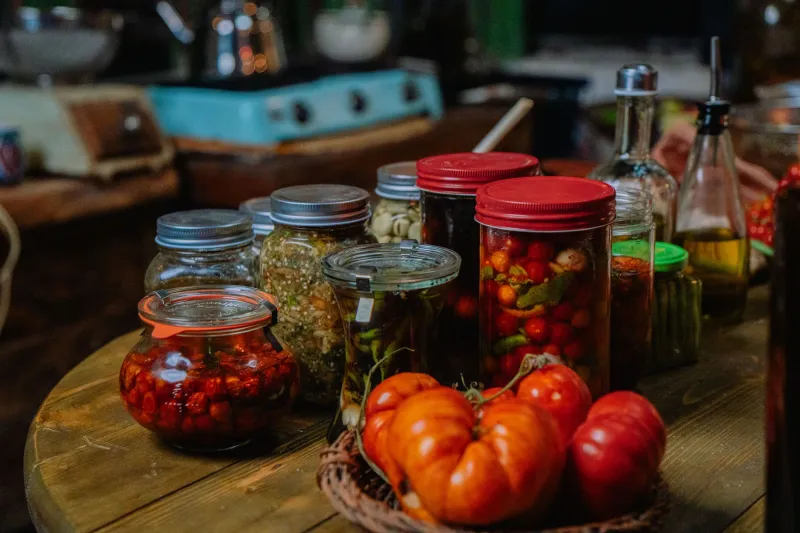
There's a jar of miso that took fourteen months to make sitting in a Brooklyn apartment right now. It was brewed from heirloom soybeans sourced through a private seed network, aged in a ceramic crock passed down through someone's Japanese American grandmother, and it is absolutely not for sale — at least not to you. To get your hands on it, you'd need to know someone who knows someone, attend a very specific fermentation circle in Bushwick, and probably bring something equally obscure to trade.
Welcome to the new underground food economy. It smells incredible, and it does not want your Venmo.
The Aesthetic That Ate the Agriculture System
Cottagecore started as a vibe. Linen aprons, ceramic crocks, wildflower bouquets on windowsills — the whole pastoral fantasy that Gen Z and older millennials turned into an aesthetic mood board somewhere around 2019. But something quietly shifted. The vibe became a value system, and the value system became an economy.
What began as people romanticizing bread baking during the pandemic has evolved into a sprawling, loosely connected web of hyper-niche food communities operating with their own currencies, reputations, and rules. We're talking fermentation collectives, heirloom seed trading networks, raw milk co-ops, foraged goods exchanges, and natural wine circles — each with their own culture, their own gatekeepers, and their own very specific definition of what counts as real food.
These aren't farmers markets with better branding. They're something closer to secret societies with better snacks.
Trust Is the Only Currency That Matters
Ask anyone embedded in one of these communities how they found it, and the answer is almost always the same: someone brought them in. There are no Yelp pages, no Shopify storefronts, no sponsored Instagram posts. The entry point is almost always a personal relationship, a recommendation, or a months-long process of demonstrating that you're serious.
In Portland, Oregon, a loose network of fermenters has been operating for nearly three years without a name, a website, or any formal structure. Members trade lacto-fermented vegetables, wild-caught koji cultures, and handmade vinegars at rotating kitchen meetups. One member, who asked to be identified only as Margot, described the community's informal vetting process: "We don't let just anyone in. It's not snobbery — it's that trust is literally the product. If someone's cutting corners or misrepresenting what they made, it ruins everything."
That trust-based model is central to how these networks function. In the absence of health department certifications or USDA labels, reputation becomes the regulatory body. People who deliver on their promises get access to more. People who don't get quietly frozen out.
Heirloom Seeds and the Politics of Scarcity
Nowhere is this underground economy more politically charged than in the heirloom seed trading world. Seed saving — the practice of preserving and exchanging open-pollinated plant varieties outside the commercial seed industry — has been around forever. But it's taken on new urgency and new participants.
Groups like the Seed Savers Exchange have existed for decades, but the newer wave of seed traders operates with a distinctly Gen Z energy: meme-fluent, aesthetically conscious, and furious about corporate consolidation of the food supply. On platforms like Discord and through private Instagram accounts, traders swap varieties with names like Dragon Tongue beans, Glass Gem corn, and Mortgage Lifter tomatoes — each one a small act of defiance against the Monsanto-ification of agriculture.
Some of these traders have turned their knowledge into modest incomes. Small seed packets sold through word of mouth, paid Substack newsletters documenting growing experiments, or workshops teaching people how to save their own seeds. It's not venture capital money, but it's real — and it's built on expertise that took years to develop.
"The seeds themselves aren't really worth much," explains one grower in Asheville, North Carolina, who runs a private seed library out of her home. "What people are paying for is the knowledge of how to grow them, the story behind them, the connection to something that almost disappeared."
Fermentation as Counterculture
If seed saving is the political wing of this movement, fermentation is its spiritual heart. The fermentation revival — which predates cottagecore by a few years and owes a significant debt to Sandor Katz's cult classic The Art of Fermentation — has spawned an entire subculture of people who relate to microbes the way some people relate to vinyl records: with obsessive reverence and an intense suspicion of anything mass-produced.
Fermentation collectives have popped up in cities across the country, from Chicago to Austin to rural Vermont. Many operate through encrypted messaging apps, hosting pop-up tastings, skill shares, and trading sessions that feel more like art openings than grocery runs. The products exchanged — naturally fermented hot sauces, hand-cultured tempeh, rare vinegars, small-batch miso — command serious respect and, increasingly, serious money.
The economics are deliberately informal. Some communities operate on a strict barter system. Others use sliding-scale suggested donations. A few have graduated to small CSA-style subscription models, where members pay a monthly fee in exchange for rotating fermented goods. None of them are trying to become the next Whole Foods. That's kind of the whole point.
The Limits of the Dream
It would be easy to romanticize all of this — and honestly, it's pretty easy to romanticize. But these communities aren't without their contradictions.
Access remains a real issue. The time, space, and baseline resources required to participate in most of these networks are significant. Growing heirloom tomatoes requires a yard, or at minimum a very committed relationship with container gardening. Fermenting miso for fourteen months requires a stable home. The aesthetics of cottagecore can slide uncomfortably close to a kind of pastoral nostalgia that erases who actually did — and still does — this labor historically.
Some community members are acutely aware of this tension. Several collectives have made explicit efforts to center BIPOC food traditions and ensure that the knowledge being celebrated doesn't get repackaged as a white bohemian trend. Others are working on sliding-scale access, seed library programs in under-resourced neighborhoods, and partnerships with community gardens.
The underground economy is real, but so are its growing pains.
Why It's Working Anyway
Despite the complications, these networks are clearly meeting a need that the mainstream food system isn't. People are hungry — in every sense — for food that comes with a story, a relationship, and a reason to trust it. In an era of ultra-processed everything and supply chain anxiety, the appeal of knowing exactly who grew your beans and why they chose that particular variety is enormous.
And there's something genuinely radical happening here, even if it's wrapped in a linen apron. These communities are building economic relationships that prioritize knowledge, reciprocity, and ecological care over efficiency and scale. They're preserving biodiversity. They're keeping old techniques alive. They're creating spaces where expertise is valued and shortcuts are called out.
The jar of miso in Brooklyn isn't just fermented soybeans. It's a small, stubborn argument that food can be something other than a commodity — and that argument, apparently, is delicious.