Fire, Leather, and Glass: The Gen Z Apprentices Who Chose Their Hands Over Their Screens

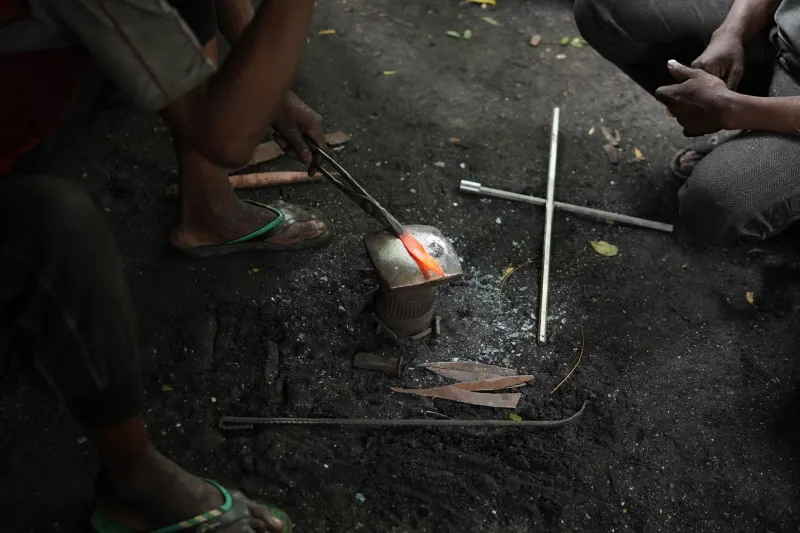
Somewhere in a converted warehouse on the outskirts of Pittsburgh, a 24-year-old named Dara is covered in soot and absolutely loving it. She's three months into an informal apprenticeship with a blacksmith who learned the trade from his grandfather. She doesn't get paid. She commutes 45 minutes each way. And she hasn't touched her graphic design work laptop since Tuesday.
"I stare at screens for eight hours a day for my actual job," she says, pausing to wipe her forearm across her cheek. "But when I'm here, I make something real. Something I can hold. That feeling is worth every blister."
Dara is not alone. Across the United States, a genuinely surprising number of young people — Gen Z and older millennials alike — are seeking out apprenticeships in trades that most of the country wrote off as obsolete decades ago. Blacksmithing. Leatherworking. Glassblowing. Bookbinding. Loom weaving. These aren't hobbies people pick up passively. They require real mentorship, physical endurance, and a willingness to be a beginner in the most humbling possible way.
And yet the movement is growing fast.
The Burnout-to-Bellows Pipeline
To understand why this is happening, you have to understand what young Americans are coming from. Remote work, algorithmic anxiety, content fatigue, and the particular exhaustion of a life lived largely through glowing rectangles have created a generation that is deeply, structurally starved for tangibility. Therapists have been talking about this for years. The research on "embodied cognition" — the idea that physical, tactile engagement is essential to mental wellness — keeps piling up. But the cultural response is only now catching up.
For a lot of people, the answer hasn't been yoga or journaling. It's been fire.
Marcus, 27, stumbled into bookbinding after a particularly brutal stretch of burnout working in UX design in Austin. A coworker mentioned she'd been taking informal lessons from an older bookbinder who worked out of a studio in East Austin. Marcus tagged along once, mostly out of curiosity. Six months later, he's binding journals from scratch and has started hosting small workshops out of his apartment.
"There's something about the precision of it," he says. "Every fold matters. Every stitch matters. You can't half-ass it and move on. The book either holds together or it doesn't. That kind of honest feedback is something I don't get anywhere else in my life."
The Underground Network You've Never Heard Of
So how are these connections actually being made? Formal trade apprenticeships in the US have always been complicated — tied to unions, licensing requirements, and industries that don't always welcome outsiders. But what's emerging now is something more informal and, honestly, more interesting.
Private Discord servers. Regional Facebook groups that look like they haven't been updated since 2014 but are quietly buzzing with activity. Word-of-mouth chains that move through maker spaces, craft fairs, and community college ceramics studios. In cities like Portland, Denver, Philadelphia, and Detroit, there are loose networks of skilled craftspeople — many of them older, semi-retired, or working artists — who are actively seeking out young people to pass their knowledge to.
Some charge nominal fees. Some trade labor for lessons. Some just want company and the satisfaction of not letting a skill die with them.
Kelsey, a 31-year-old leatherworker in Denver, learned her trade through exactly this kind of informal pipeline. She found her mentor through a mutual friend at a craft fair, spent a summer basically just watching and running errands, and gradually earned the right to start working on her own pieces. Now she's doing the same for two younger apprentices she met through a local maker space.
"It's not glamorous," she says. "You're sweeping floors and fetching tools for a long time before anyone lets you touch anything important. But that's how it works. That's how it's always worked."
The Irony of the Algorithm
Here's where it gets genuinely funny: the single biggest driver of this anti-screen movement is social media. Specifically, short-form video.
TikTok and Instagram Reels have been absolutely flooded with blacksmithing content, glassblowing clips, leatherwork process videos, and loom tutorials for years now. These videos rack up millions of views. The comments sections are full of people asking how to get started, where to find a mentor, what tools to buy first. The algorithm, in its infinite irony, has become the primary recruiter for a movement explicitly designed to escape the algorithm.
"I found my blacksmithing mentor because I watched his videos for six months and then finally just DM'd him," says Jordan, 22, from outside Columbus, Ohio. "He was surprised anyone actually reached out. But he said yes."
This paradox is worth sitting with. The same platforms that are making young people feel hollow and overstimulated are also the ones connecting them to the people and practices that offer relief. It's not a contradiction so much as a reminder that tools are rarely all good or all bad. It's what you do with the exit that matters.
What They're Actually Getting Out of It
Ask anyone in this movement what they're getting from it, and you'll hear some version of the same few things. Presence. Patience. Evidence.
Presence, because you literally cannot be distracted when you're working with molten glass or a 1,500-degree forge. Your attention is not optional. The material demands it.
Patience, because none of these skills come quickly. There's no tutorial that skips the boring parts. There's no cheat code. The gap between your first attempt and something you're proud of is measured in months, sometimes years. For a generation raised on instant feedback loops, this is genuinely radical.
And evidence — maybe the most important one. In a world where so much work is invisible and ephemeral (emails sent, decks made, posts published and buried), making something you can hold in your hands is quietly profound. A bound book. A forged hook. A leather wallet that will outlast you. These objects are proof that time was spent well.
"I made a knife last month," says Dara, back in that Pittsburgh warehouse. "A real one. I made it from raw steel. I can hold it. My mom can hold it. It will exist after I'm gone. Try doing that with a spreadsheet."
The Bigger Picture
This isn't just a wellness trend or a quirky subculture sidebar. It's a genuine cultural signal about what young Americans feel is missing from modern life. The hunger for mastery, for mentorship, for slowness, for things that are difficult and real — these aren't niche desires. They're deeply human ones that the digital economy has been terrible at satisfying.
The craftspeople who are opening their workshops and their knowledge to a new generation are doing something genuinely important. They're keeping skills alive, yes. But they're also modeling a different relationship to time, to work, and to what it means to make something.
And if the occasional TikTok video is what gets someone through the door of a forge for the first time? Honestly, that seems like a fair trade.