Gloriously Broken: Why Creatives Are Spending Real Money on Tools That Refuse to Work
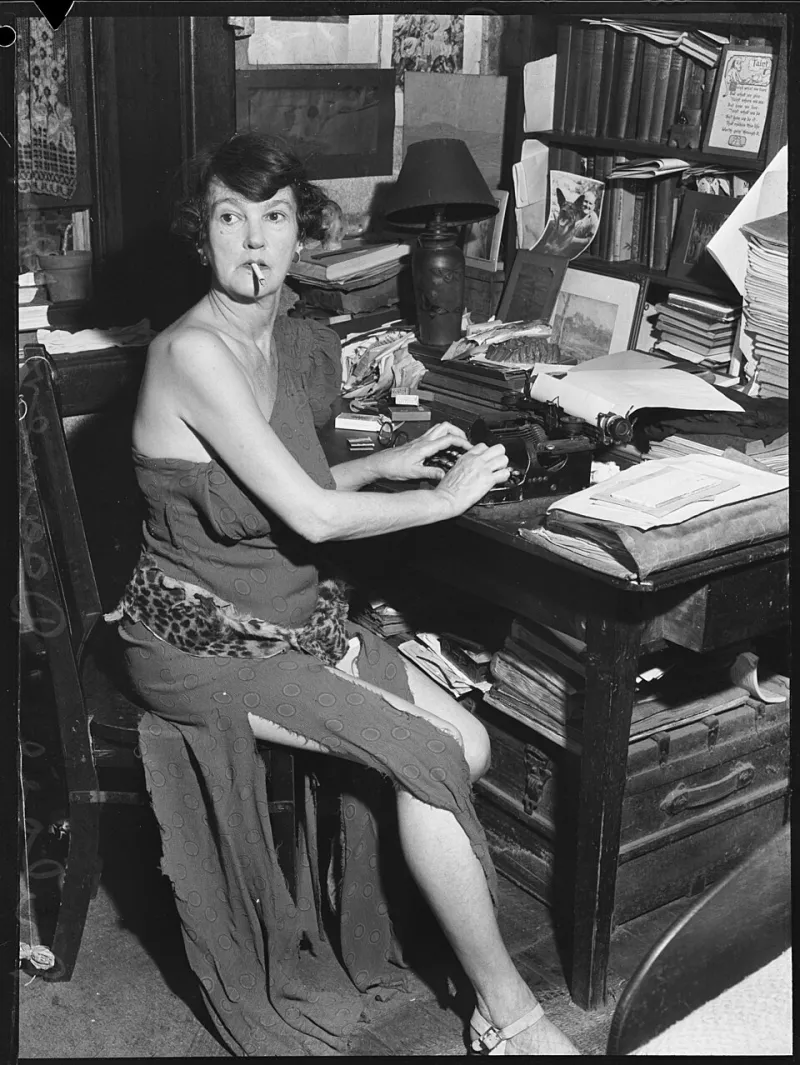
Photo: People magazine, Public domain, via Wikimedia Commons
The Machine That Fights Back
Let me tell you about my friend Cal. Cal is a musician and producer in Chicago who, by his own cheerful admission, does not have a lot of money. He eats a lot of rice. He has strong opinions about which laundromats are worth the extra quarter. And last spring, he spent $340 on a 1970s reel-to-reel tape recorder that, as of this writing, has eaten four full reels of tape and once made a sound described by everyone in the room as "a dying whale discovering jazz."
Cal is not unusual. Across creative communities in cities like New York, Los Angeles, Portland, and Nashville — and increasingly in smaller scenes in places like Asheville, Richmond, and Tucson — a recognizable type has emerged: the analog devotee. The person who owns a typewriter that requires a specific touch or it skips letters. The photographer shooting on a medium format film camera held together partly by a rubber band. The filmmaker whose Super 8 footage has a light leak that cannot be replicated in post-production and that they would never want to replicate in post-production.
They are not rich. They are not Luddites. And they are making some of the most interesting creative work in America right now.
Friction as a Feature
Here's the thing the productivity discourse doesn't want you to know: seamlessness is boring. The frictionless creative tool — the perfectly responsive DAW, the digital camera that nails exposure in any light, the word processor that autocorrects your way to coherence — optimizes the process at the direct expense of the experience. And for a certain kind of creator, the experience is the whole point.
When you're working on a typewriter that requires real physical force, you don't just write differently — you think differently. The physical commitment of pressing a key makes you more deliberate. The impossibility of a quick "ctrl+Z" makes each word feel like a small bet. The sound of it, that sharp mechanical percussion, gives the act of writing a presence that staring at a backlit screen simply cannot.
This isn't nostalgia. Or rather, it's not only nostalgia. It's a considered philosophical position about what creative work is actually for.
"I'm not trying to be efficient," says Priya Nair, a poet and visual artist based in Brooklyn who works almost exclusively on a 1960s Olivetti typewriter she found at an estate sale in New Jersey. "Efficiency is for spreadsheets. I'm trying to feel something while I'm making something. The resistance of the machine is part of that."
The Real Cost of Free Tools
There's a dark joke hiding inside the analog luxury trend: the "free" digital tools that replaced all this clunky, temperamental hardware came with costs that just weren't listed on the box.
Adobe's subscription model. The creative work that gets fed into AI training datasets without compensation or consent. The platforms that own your audience relationship and can revoke it at any time. The DAWs and plugins that require constant updates, subscriptions, and compatibility patches. The smartphone camera that is genuinely extraordinary and that is also a surveillance device that belongs to a corporation.
Against all of that, spending $200 on a fully mechanical film camera that you own outright, that requires no subscription, that cannot be remotely updated or deactivated, that produces a physical object — a negative — that exists in the world independent of any platform — starts to look less like an extravagance and more like a very reasonable transaction.
The analog tool is expensive once. The digital ecosystem is expensive forever, and the costs compound in ways that aren't always financial.
Failure as Aesthetic Philosophy
The light leak on Marcus Webb's film photographs has become, in certain corners of the internet, genuinely iconic. Webb is a photographer and musician based in Atlanta who shoots almost exclusively on vintage cameras he buys broken and repairs himself — partially. Intentionally partially.
"I could fix the light leak," he says. "I know how to fix it. I choose not to because what it does to the image is more honest than what a perfect camera would do. My life isn't perfectly exposed. Why should my photographs be?"
This is the aesthetic argument at the heart of analog devotion: that the imperfections of old tools tell the truth about the conditions of making in a way that perfected digital tools actively conceal. The grain in film photography. The wow-and-flutter in tape recordings. The uneven ink distribution of a typewriter ribbon running low. These are not bugs. They are evidence. They prove that something real happened, that a human being was in a room with a physical object, and that time passed.
In an era of AI-generated imagery and seamlessly produced content, that proof feels increasingly precious.
Status Symbol for the Anti-Status Set
Okay, let's be honest about the complicated part. There is absolutely a status dimension to analog culture, and pretending otherwise would be dishonest.
A well-maintained vintage Leica is not an egalitarian object. A working Moog synthesizer is a significant financial commitment. The culture around analog tools can tip, sometimes uncomfortably, into a kind of connoisseurship that has its own hierarchies and gatekeeping. The person who sneers at your film camera because it's not the right model is a real person who exists and is annoying.
But here's where it gets interesting: the creators most committed to this philosophy tend to be actively working against that dynamic. The ethos isn't "own the best vintage gear." It's "own the broken, temperamental, difficult thing and learn to work with its problems instead of against them." That's a genuinely democratic proposition. Broken cameras are cheap. Thrift store typewriters are cheap. The investment isn't primarily financial — it's attentional.
The real luxury, in this framing, is time. The willingness to spend three hours getting one usable photograph instead of firing off three hundred digital shots and sorting them later. The decision to type a draft on a machine that forces you to commit. In a culture that treats speed as the primary virtue, slowness is the radical act.
Choosing Your Constraints
Cal's reel-to-reel, for the record, has now produced two tracks that he describes as the best things he's ever made. The whale-jazz incident turned out to be a broken capstan motor that he fixed with a YouTube tutorial and a replacement part that cost eleven dollars. The tape it ate is gone, but the recordings it made before eating the tape have a warmth and density that his digital recordings, he says, simply don't.
He's not going back. Not because he's precious about it, but because the machine taught him something about his own creative process that the frictionless tools never could: that the obstacle is sometimes the point, and that choosing to work with difficult things — really choosing it, with intention — is one of the few acts of genuine creative freedom left in a landscape that has optimized almost everything else.
The tool that fights back makes you fight back too. And sometimes, that's exactly what the work needs.