Rewind to Resist: How the Cassette Tape Became a Radical Statement Against the Stream
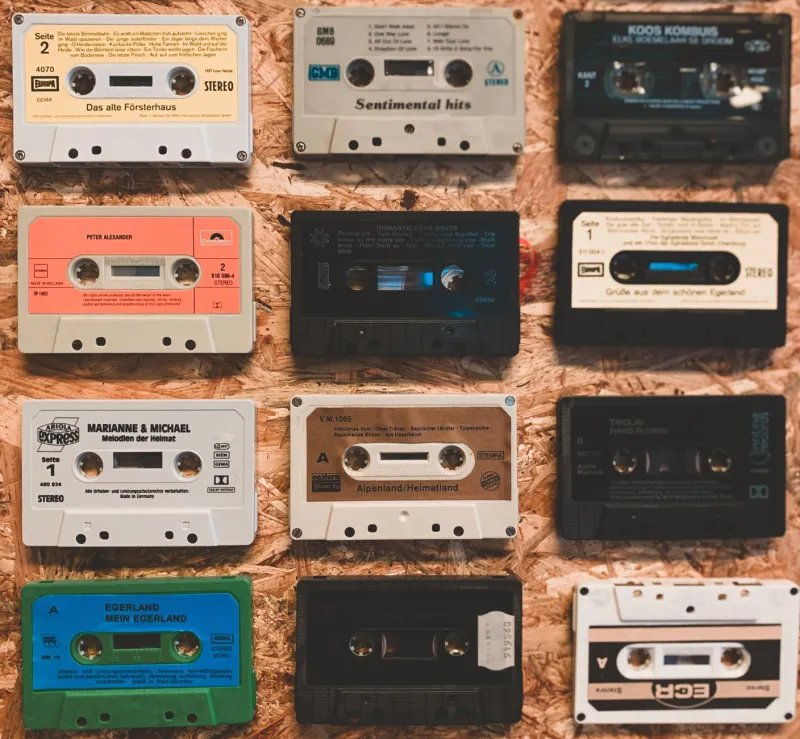
There's a specific kind of quiet that happens when you drop a cassette into a player. The click of the door. The soft mechanical whir before the music starts. It's a sound that exists nowhere in a streaming playlist, nowhere in a Bluetooth speaker's memory. It's the sound of choosing something — deliberately, physically, irreversibly.
That choice is exactly why cassette tapes are having a cultural moment that feels less like a retro trend and more like a philosophical uprising.
The Numbers Don't Lie (Even When the Algorithm Does)
Cassette sales in the US have been climbing steadily for years, hitting numbers that would have seemed laughable a decade ago. According to the Recording Industry Association of America, physical cassette revenue has more than tripled since 2018. But the really interesting story isn't in the major label reissues of Taylor Swift albums or the Harry Styles limited editions moving units at Urban Outfitters. It's happening in basements, Bandcamp pages, and tiny post office boxes being stuffed with hand-labeled tapes headed to listeners who specifically, stubbornly sought them out.
Small independent labels like Hausu Mountain out of Chicago, or Already Dead Tapes in Illinois, have been quietly building entire ecosystems around the format — releasing experimental, ambient, noise, and lo-fi music on tape because the medium fits the music in a way that a compressed digital file simply doesn't. The warmth of tape saturation isn't a bug. For these artists and their audiences, it's the entire point.
Press Play on Intention
Here's what streaming culture quietly took from us: the experience of sitting with a record. Of committing. When you queue up a playlist, the relationship between listener and music becomes frictionless to the point of meaninglessness. Skip, shuffle, recommend, repeat. The algorithm fills the silence before you even notice silence was there.
A cassette forces a different contract. You picked this tape. You flipped it over at Side B. You rewound it when the song hit different. That friction — that tiny resistance in the mechanics — creates something that's increasingly rare in 2024: attention.
Artists working in tape culture talk about this constantly. Brooklyn-based producer and label runner Mira Solis, who runs a micro-label out of her apartment releasing experimental electronic music on limited-run tapes, puts it plainly: "When someone buys a tape from me, they're not impulse-clicking. They heard about it somewhere, they sought it out, they paid for it, they waited for it to arrive. By the time they listen, they're already invested. That relationship is completely different from a stream."
That relationship translates to real loyalty — the kind that sustains careers. Mira's label sells out runs of 50 to 150 tapes within days of announcement, almost entirely through word of mouth and a modest newsletter.
The Art Object Problem
There's also something happening on the visual side of cassette culture that streaming will never replicate. The tape itself is a canvas.
Hand-stamped shells, custom j-cards folded into origami-adjacent inserts, spray-painted cases, hand-written track listings, xeroxed collage artwork — the cassette has become a vehicle for visual art that exists in direct proportion to its musical content. You hold the whole thing. You read the liner notes. You notice the smudge of ink on the label where someone pressed too hard.
This isn't incidental to the music. For a growing community of artists and collectors, the physical object is part of the art. It's the same impulse that drives people to vinyl, but tape has a scrappier, more democratic energy. You don't need a pressing plant and a $3,000 minimum order. You need a dubbing deck, some blank tapes, a printer, and something worth saying.
That accessibility is a big deal. It means the barrier to entry for releasing music on cassette is low enough that artists at the very beginning of their careers can participate. A bedroom producer can release 30 copies of their first project on tape, hand them to friends, sell them at a local show, and have created a real artifact — something that exists in the world, that someone will find at a thrift store in fifteen years and wonder about.
Community in the Rewind
What's maybe most interesting about cassette culture right now is how thoroughly it functions as community infrastructure. Tape traders, zine-adjacent distros, small festivals centered around independent music and physical media — these aren't isolated pockets of nostalgia. They're nodes in a network of people who've made an active decision about how they want to relate to music and to each other.
In cities like Portland, Austin, Philadelphia, and Los Angeles, cassette swap meets have started appearing alongside record fairs. Online, communities on Reddit, Discord servers, and low-key Instagram pages trade recommendations, sell collections, and debate the merits of chrome versus ferric tape with the kind of earnest specificity that only exists when people genuinely care.
Label owners report that their customer bases are younger than you'd expect — not just thirty-somethings chasing nostalgia, but twenty-two-year-olds who've never owned a tape player and go out to buy one specifically because they want in on what's happening. For a generation that grew up entirely inside the stream, the tactile world of physical music is the exotic frontier.
Defiance That Sounds Good
There's a word that comes up a lot when you talk to people deep in tape culture: intentional. It's a word that sounds like wellness content but means something genuinely subversive in a media landscape designed to remove every moment of friction, every pause, every choice.
Choosing a cassette is a small act. It won't disrupt Spotify's quarterly earnings. It won't reroute the algorithmic rivers that shape what most people hear. But it does something quieter and maybe more durable — it creates a different kind of listening, a different relationship between artist and audience, a different way of valuing music that isn't measured in streams or playlist placements.
It says: I wanted this specific thing. I found it. I hold it in my hands.
In a culture that profits from your passive scroll, pressing play on a tape is a tiny, beautiful act of pushing back. And it sounds incredible doing it.