Half-Finished and Perfectly Honest: The Gen Z Collectors Who Are Turning Abandoned Projects Into Art
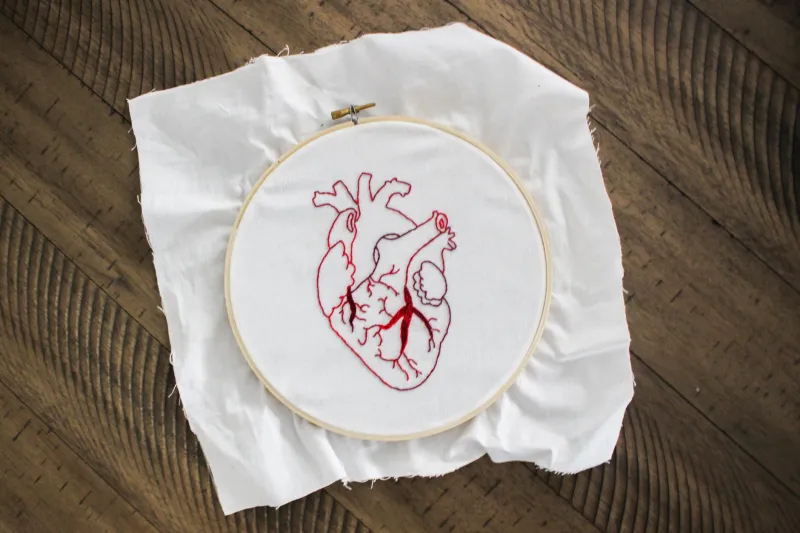
The centerpiece of Imogen's apartment in Minneapolis is a cross-stitch that will never be finished. It's a pastoral scene—rolling hills, a red barn, a sky half-stitched in three shades of blue that stop abruptly somewhere around where the clouds should be. She bought it at a Goodwill for two dollars. It's been framed and mounted above her couch for three years.
"People ask me when I'm going to finish it," she says. "And I tell them: it's already done."
Imogen, 25, is part of a quietly growing community of young collectors who seek out abandoned creative projects—incomplete needlepoints, half-painted ceramics, vintage model kits with unopened bags of parts, unfinished quilts folded and forgotten—and elevate them into something between personal collection and public exhibition. They're not ironic about it. They're not sad about it. They find these objects genuinely, deeply moving.
Thrift Stores as Archaeological Sites
For this community, the thrift store isn't a place to find cheap furniture or retro fashion. It's an archive. Every abandoned craft project on a Goodwill shelf represents a human story that stopped mid-sentence—a retirement hobby that outlasted the retiree, a pandemic project that collided with burnout, a kid's craft kit that sat in a closet for twenty years before being donated untouched.
"I think about who held this before me every single time," says Theo, 28, a collector based in Philadelphia who has amassed over sixty unfinished projects in a spare room he's started calling "the gallery." His collection spans decades of American craft culture: a macramé wall hanging from what he estimates is the mid-1970s, a counted cross-stitch kit still in its original packaging from 1988, a half-assembled wooden birdhouse with a single wall missing.
The incompleteness isn't a flaw to him. It's the whole point.
"A finished project is a closed door," he says. "An unfinished one is a window. You can still see through it into the person who started it."
The Pop-Up Museum of Almost
What started as private collections has, in several cities, evolved into something more public. Pop-up exhibitions featuring exclusively unfinished work have appeared in gallery spaces, coffee shops, and community centers in Chicago, Austin, Seattle, and New York over the past two years—usually organized through word of mouth, sometimes with small admission fees that cover the cost of the space.
These shows resist the usual gallery logic. There are no artist statements about completed visions. There are no price tags representing finished value. Instead, the curation emphasizes the moment of stopping—what the work looked like when someone put it down and walked away, possibly forever.
At a show in Chicago last fall called Effort, organizer Priya displayed thirty-two objects sourced from thrift stores across the Midwest. Each one had a small card with only three pieces of information: what the object was, where it was found, and an estimated decade of origin. No names, no narratives. The gaps were intentional.
"I didn't want to fill in the story," Priya says. "I wanted people to feel the gap. The gap is what it's about."
Against the Cult of Completion
There's a cultural argument embedded in this practice that goes beyond aesthetics. These collectors are, consciously or not, pushing back against a productivity culture that measures human worth in outputs and finished products—and against a social media landscape where only the polished, completed, and presentable gets shared.
"Everything you see online is finished," says Imogen. "The perfect meal, the finished renovation, the completed workout. Nobody posts the thing they gave up on. But giving up on things is one of the most human experiences there is. Why are we pretending it doesn't happen?"
The unfinished project, in this reading, is a more honest artifact than the completed one. It carries the weight of real life—the interrupted afternoon, the unexpected grief, the ambition that exceeded available time or energy. It doesn't perform. It just sits there, incomplete and true.
There's also something generationally specific happening here. Gen Z has grown up inside an economy that frequently promises completion—the finished degree, the stable career, the achievable dream—and delivers something messier. Collecting the evidence of other people's interrupted ambitions might be a way of honoring that messiness rather than pretending it away.
The Ethics of Someone Else's Unfinished Business
Not everyone is comfortable with this practice, and the collectors themselves grapple with it. There's something inherently presumptuous about deciding that someone else's abandoned effort is beautiful—about putting a frame around what might have been a source of shame or grief for the person who left it behind.
"I think about that," Theo admits. "I try to hold it carefully. I'm not laughing at these things. I'm genuinely honoring them. But I can't know if the person who started that birdhouse would feel honored or embarrassed."
The best answer most collectors seem to have arrived at is intention. They approach these objects with something close to reverence. They don't mock the unfinished work or use it as a punchline. They display it the way a museum displays a fragment of ancient pottery—as evidence of a human being who was here, who tried, who mattered.
Imogen's cross-stitch still hangs above her couch. The blue sky still stops where it stopped the day someone put it down. Guests still sometimes ask when she'll finish it.
She's stopped explaining. She just smiles and says: look at it. Really look at it. Isn't it already everything it needs to be?