Off the Grid, On Purpose: The Young Americans Who Vanished From the Internet and Never Looked Back
Somewhere in East Nashville, a group of about thirty people gathers every third Saturday in the back room of a record shop. There's no event listing on Eventbrite. No Instagram story counting down the days. No RSVP link. If you want to come, someone who's already been has to tell you about it — in person, ideally, or through a letter that gets passed hand to hand like contraband. The host, who goes by the name Wren and declined to share anything else, puts it simply: "If you found us through a search engine, you found the wrong thing."
This is what the edges of American social life look like in 2025 — and it's weirder, more principled, and frankly more interesting than anything happening on your For You page.
The Philosophy Before the Practice
To understand why young people are building deliberately invisible communities, you have to start with what they're reacting to. It's not just the usual complaints about doomscrolling or parasocial exhaustion, though those are real. It's something more structural: a growing awareness that digital participation is, by default, a form of documentation. Every like, every location tag, every late-night search query becomes a data point in a permanent record that nobody asked to create.
For a generation raised entirely inside that system, opting out isn't nostalgic. It's radical.
"People think we're being dramatic," says Marcus, a 24-year-old in Portland who helps organize what he calls a 'correspondence circle' — a rotating network of pen pals who exchange encrypted physical letters. "But we've watched our parents get served ads based on conversations they had out loud in their own kitchens. We've seen friends lose jobs over posts from when they were teenagers. The internet doesn't forget, and that's not a feature. That's a threat."
The movement — if you can call something this deliberately decentralized a movement — doesn't have a name, a manifesto, or a central organizing body. That's kind of the point.
The Toolkit of Disappearance
So how do you actually build a social network that evades the surveillance architecture of modern life? Turns out, you go back to basics and get creative.
Burner phones — prepaid devices purchased with cash — are a common first step. They're used for coordination, then discarded or reset. Some communities use Signal for encrypted digital messaging, but treat it as a bridge, not a home base. The goal is always to move conversations into physical space as quickly as possible.
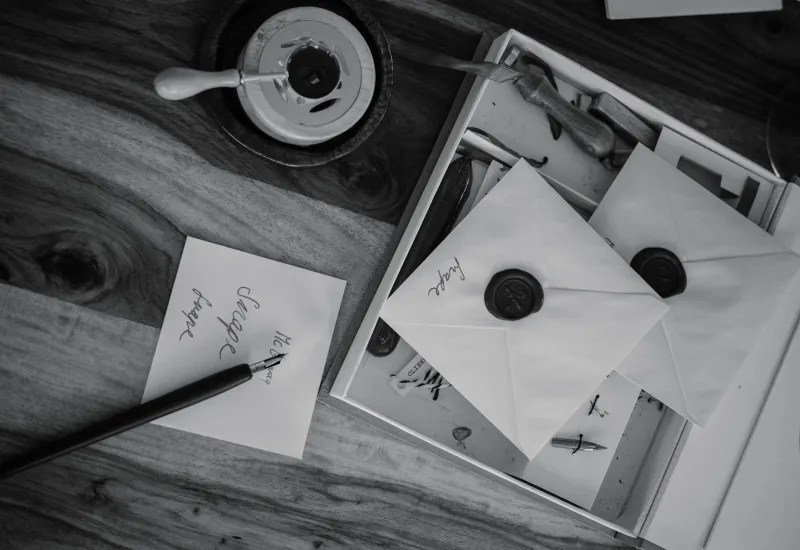
Encrypted letter exchanges are having a genuine renaissance. Marcus's correspondence circle uses a modified version of PGP encryption — a decades-old privacy tool — to encode messages before printing and mailing them. Recipients decode using a key they received in person. It's slow, deliberate, and almost absurdly analog. It's also, members insist, the point. "When you have to wait two weeks for a reply, you think harder about what you're saying," Marcus explains. "There's no such thing as a throwaway message."
In-person meetups follow strict phone protocols. Some groups ask attendees to leave devices in a pouch at the door — a practice borrowed from comedy clubs that use Yondr bags to prevent recording. Others go further, designating entire gathering spaces as 'dark zones' where phones aren't just silenced but physically absent.
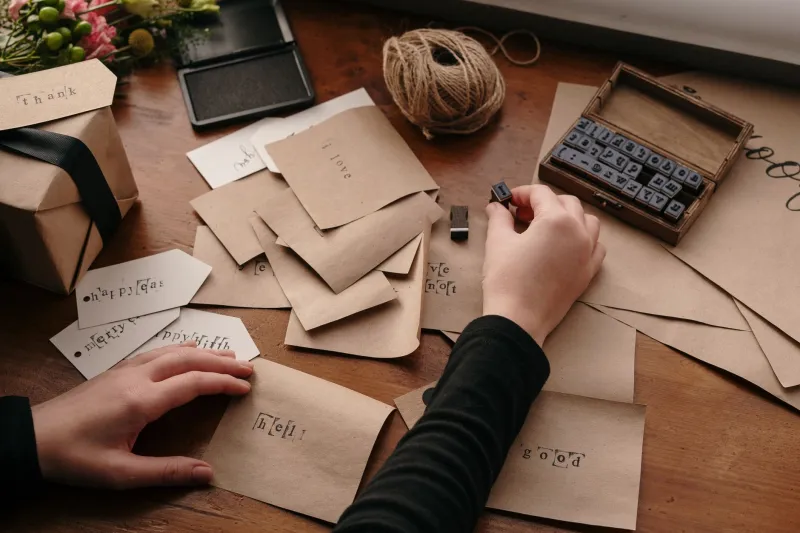
Zines and printed newsletters circulate through these networks the way social media feeds do online — carrying news, creative work, event announcements, and community gossip. The difference is that they can't be indexed, scraped, or algorithmically amplified.
Freedom Tastes Like Inconvenience
Here's the thing nobody in these communities will pretend otherwise about: it's genuinely inconvenient. Coordinating without a group chat is hard. Making new friends without mutual Instagram followers is awkward. Missing out on digital events because you're not on the platform is a real loss.
But that friction, many participants say, is exactly what makes the connections feel real.
Dionne, a 27-year-old visual artist in Chicago who has been involved in offline-first communities for about two years, describes the shift as learning to tolerate uncertainty. "Online, you always know where everyone is, what they're doing, how they feel about you based on whether they watched your story. It's this constant low-grade surveillance of each other. When you take that away, you have to actually trust people. It's uncomfortable at first and then it's the most alive you've ever felt."
There's also something quietly countercultural about the aesthetic of these spaces. Without the pressure to document everything for an audience, gatherings get genuinely weird. Art goes unposted. Conversations go unrecorded. Performances happen for the people in the room and nobody else. The experience becomes, in the truest sense, ephemeral — and for a generation drowning in content, ephemeral feels like a luxury.
The Political Undercurrent
It would be a mistake to read all of this as purely personal or aesthetic. The surveillance-avoidance instinct has a political dimension that participants are often explicit about.
In a climate where protest movements get monitored, where facial recognition technology is deployed at public gatherings, and where social media companies cooperate with law enforcement data requests, building untrackable community infrastructure is also a form of collective self-defense.
"I'm not doing anything illegal," says Wren from Nashville. "But I've watched what happens to activists who assumed their digital communications were private. I've seen how quickly 'we're just keeping records' turns into 'we're using those records against you.' Building community outside of that system isn't antisocial. It's self-preservation."
This framing — privacy as protection rather than secrecy — is central to how these communities understand themselves. They're not hiding. They're just refusing to perform.
What Gets Built in the Dark
What's actually happening inside these invisible networks? Mostly the same things that happen in any community: people falling in love, making art, arguing about politics, sharing food, supporting each other through hard times. The difference is the texture.
Without metrics, there's no popularity contest. Without algorithmic amplification, ideas spread because people genuinely find them interesting, not because they triggered an engagement spike. Without permanent records, people take social risks — say the half-formed thing, try the bad idea, be wrong out loud — that they'd never attempt on a platform where everything is archived.
Dionne puts it best: "Online, I'm always performing a version of myself that I can defend later. Here, I get to just be a person. That's rarer than it sounds."
For a generation that grew up being told the internet was the only place community could live, discovering that it can also thrive in the dark — in record shops and living rooms and hand-addressed envelopes — feels less like a rejection of the future and more like a quiet insistence on a different one.
The grid will still be there tomorrow. These people just decided they don't have to be on it.